ChatGPT 5.6 Deep Dive: Agentic Workflows and Real-Time Interactive Intelligence
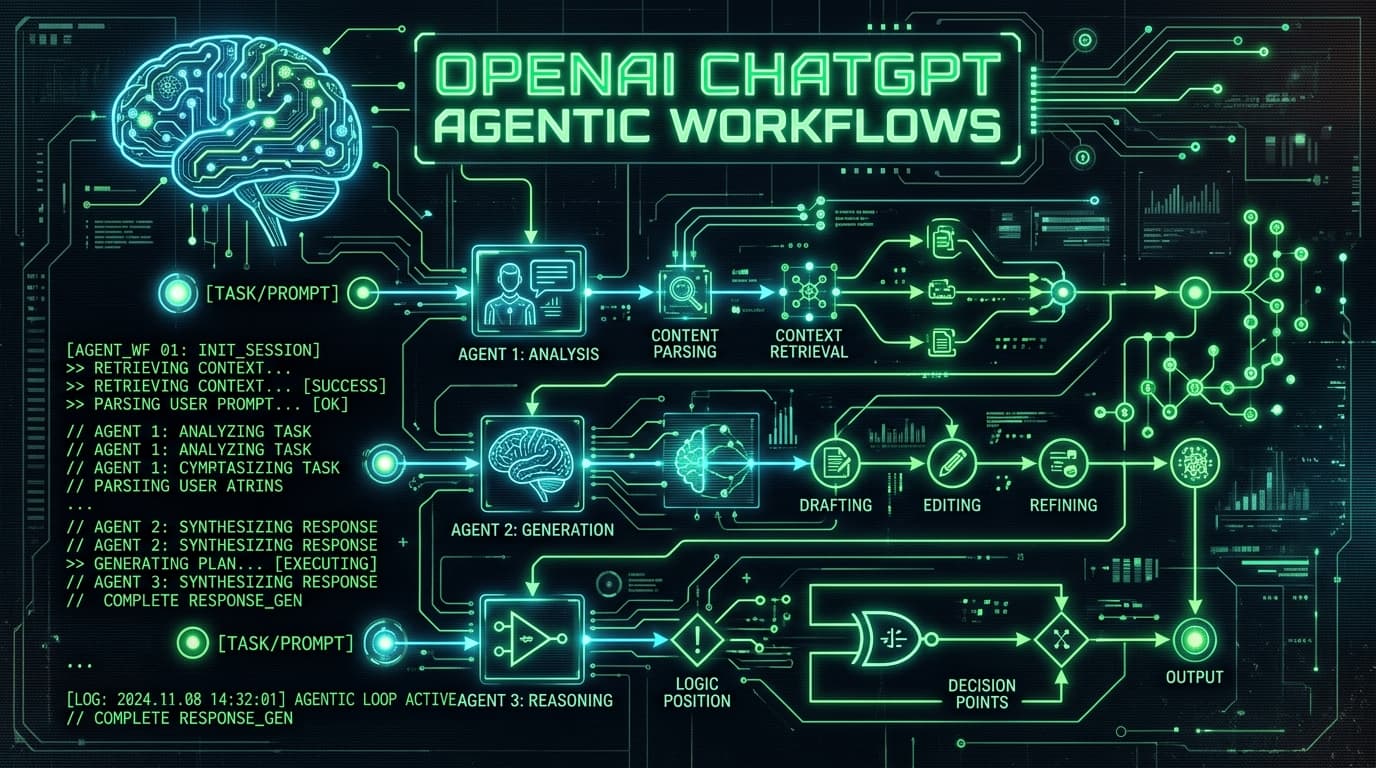
OpenAI's latest rollout of ChatGPT 5.6 shifts the paradigm from standard prompt-and-response engineering to true agentic task delegation. Built on top of a highly optimized reasoning core, 5.6 incorporates a native self-correcting logic engine. When a user requests a complex task, the model does not write the output immediately; instead, it drafts a multi-step execution plan, queries auxiliary search vectors, executes internal code iterations, and cross-references its answers against strict logical constraints.
A key component of this launch is the implementation of long-term memory persistence and session-aware state management. In older models, context windows refreshed between sessions, making long-term collaboration difficult. ChatGPT 5.6 introduces secure vector-based memory blocks that cache user preferences, code guidelines, and historical context across different conversations. This allows developers to build AI assistants that learn specific repository layouts and coding standards over months of project collaboration without requiring manual prompt bloating.
For developers building software integrations, the OpenAI 5.6 API now natively supports multi-agent coordination. Using a centralized orchestration layer, a master agent can spawn specialized sub-agents (e.g., an automated linting agent, an API testing agent, a document generation agent) to solve distinct sub-tasks in parallel. By integrating this system with local filesystems and testing tools, engineering teams can automate routine code maintenance, API testing, and deployment preparation with minimal human oversight.